
I had a conversation with a client who told me that every time she goes hiking with her family, her right knee starts nagging her.
For a while she kept it to herself, then her husband started asking, “What happened, is your knee fine? You’re walking as if you’re limping.”
And sometimes, just walking down the street, her knee feels like it’s about to give out. Only for a second and then it passes, but it’s enough to make you careful with every step after that.
If you’ve felt something like this, the twinge going down the stairs, the stiffness when you get up from the couch, a knee you don’t fully trust anymore, this one’s for you.
Why knees start to hurt
A lot of people assume “it’s just age…”
Sometimes there is a clear reason, arthritis is a real thing for many people, and so is an old injury, a fall, a twisted knee or a surgery.
But most of the time, what I see is one of these:
🪑 Hours of sitting, so the leg muscles get used less and less every year
🍑 Weak glutes and outer hips, so the knee caves inward with every step and every stair
🦵 Only training the front of the thigh, while the back of the leg and the calves get ignored
🦶 Stiff hips and ankles, so the knee ends up doing work that’s supposed to be shared
⚖️ A few extra kilos, which add more load on the joint every time you take a step
What actually helps
Whether it’s wear and tear, arthritis, an old injury, or simply not enough movement, the solution is the same:
strengthen the muscles around the knee so they take the load off the joint.
It’s also exactly what you’d work on if you went to physical therapy.
Your knee relies on the muscles around it, your thighs, glutes, hamstrings and calves, to share the load.
When those muscles are strong, they absorb the impact and the joint gets a break. When they’re weak, all of that load goes straight into the knee, and that’s when it starts to complain.
Let me share a simple routine that has worked for a lot of my clients 👇
The 5-move knee routine
All you need is a folded towel, a chair, and a wall.
Go in order, 20 reps each, and finish with the wall sit.
Do it at least twice a week.
Move slowly, and if anything gives you a sharp pain, make the movement smaller or skip it for today.
1. Towel knee extensions (20 each leg)
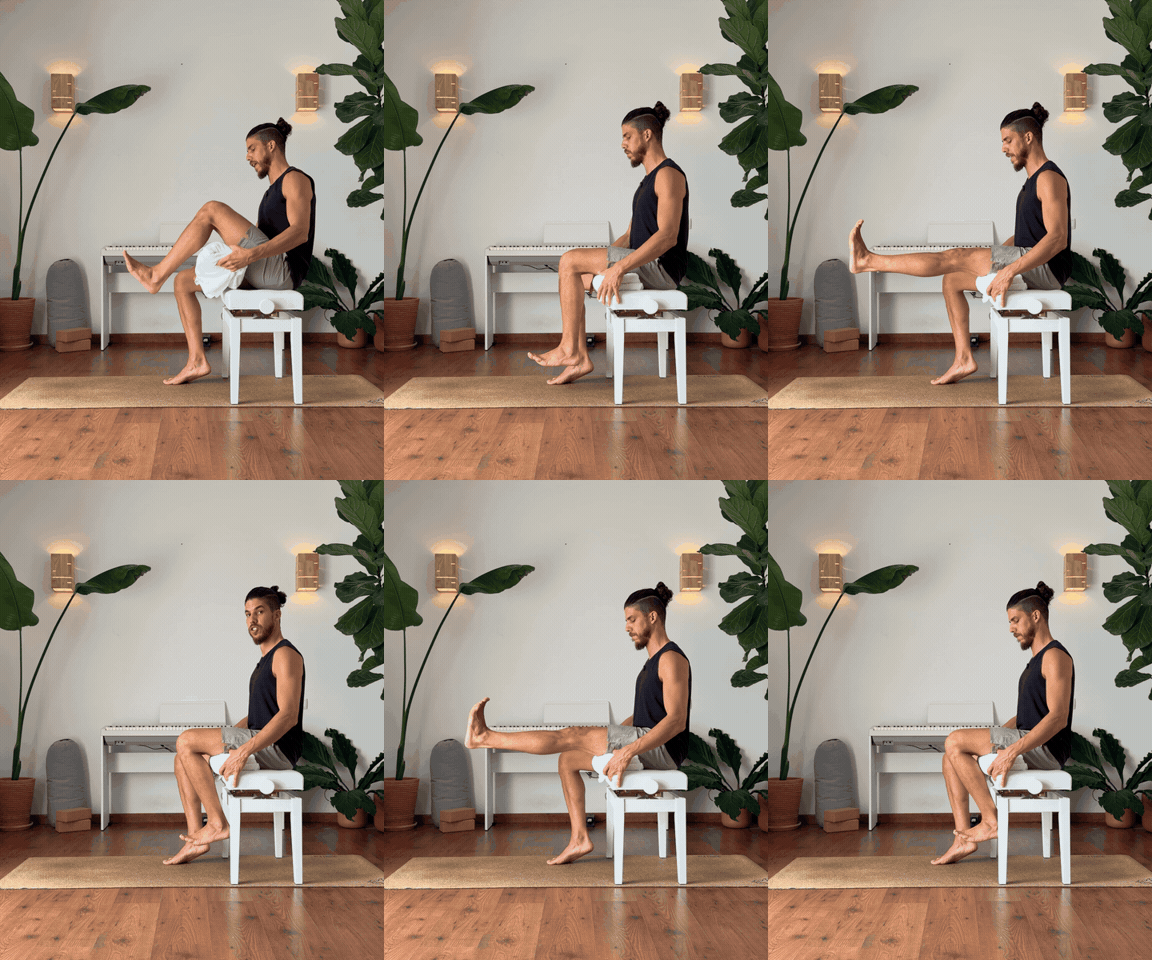
How:
Sit tall on a chair and put a folded towel under your thigh, just above the knee.
Straighten the leg all the way, squeeze the front of your thigh for a second, then lower it slowly.
Do 20, then switch legs.
Why it helps:
It wakes up the thigh muscle right above the knee, the one that keeps it steady, without putting any weight on the joint.
The towel lifts your leg a little so you can reach a full straight leg.
This is the best place to start if your knee is sensitive.
2. Side-to-side squat walks (20 steps)
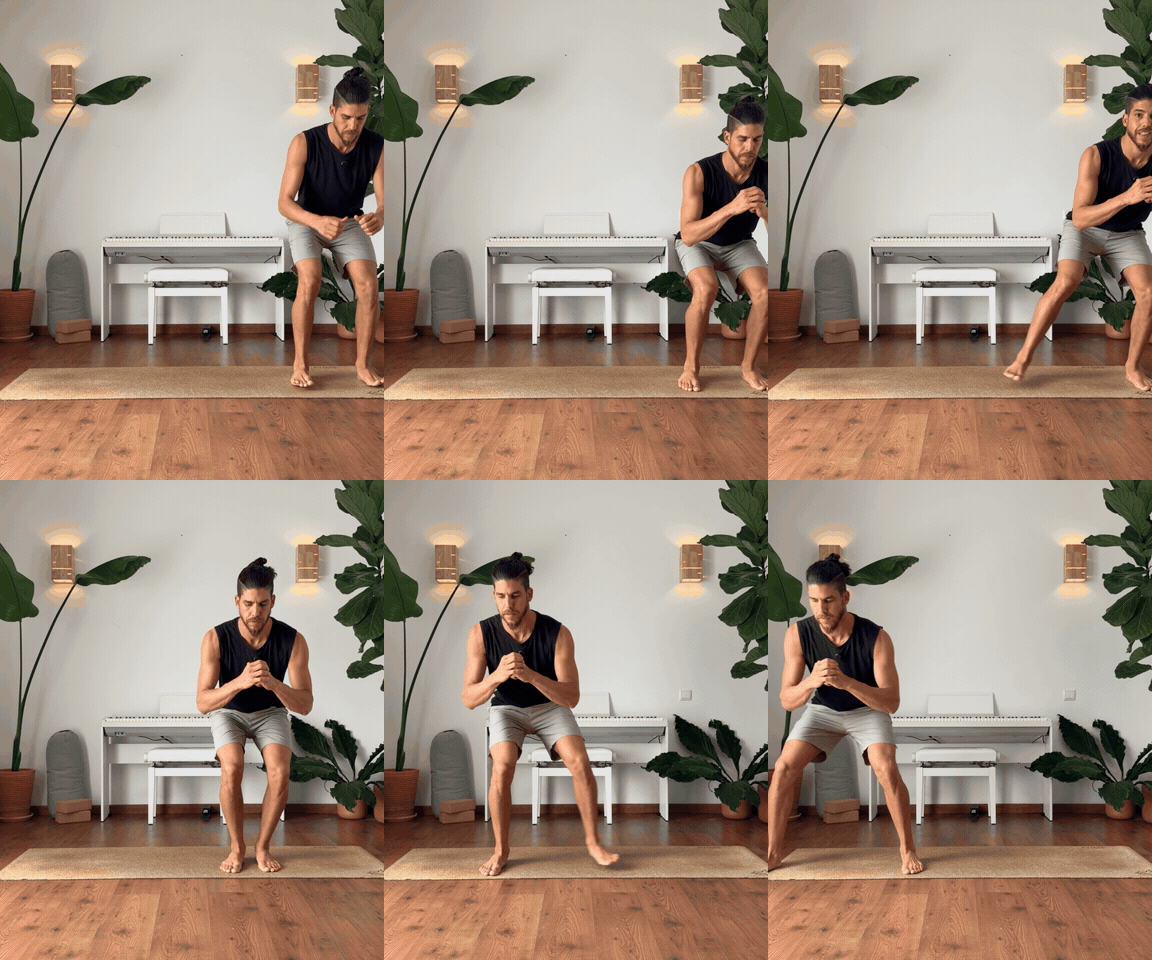
How:
Stand with your feet hip-width apart, bend your knees a little and sit back like you’re about to sit in a chair, with your hands together in front of your chest.
Stay low and step to the side, bring the other foot in, and keep going.
Take 10 steps one way and 10 back, keeping your knees pointing over your toes.
Why it helps:
It strengthens the outer hips and glutes.
Those are the muscles that stop your knee from collapsing inward when you walk, climb stairs or step off a curb.
3. Glute bridges (20 lifts)
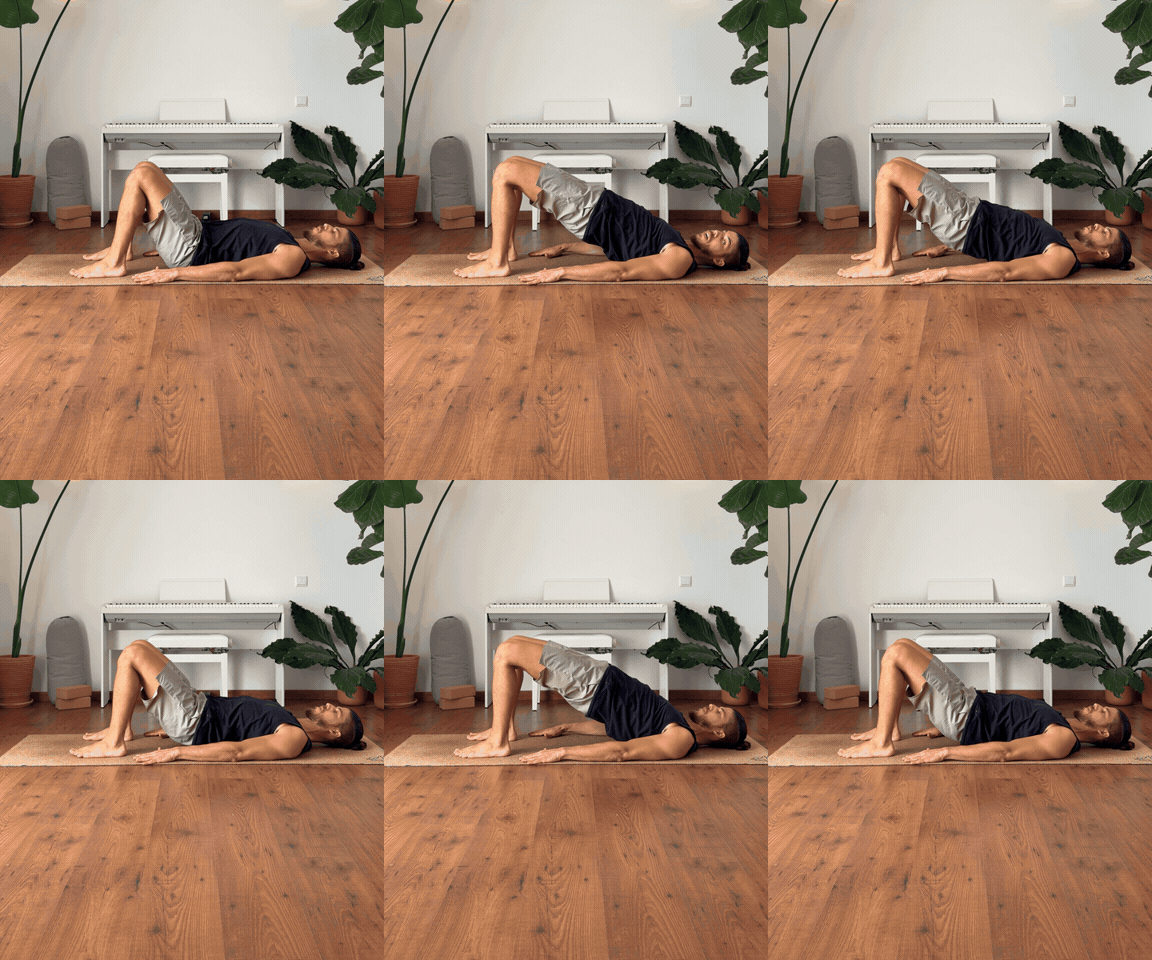
How:
Lie on your back with your knees bent, feet flat and hip-width apart, arms by your sides.
Press through your heels and lift your hips until there’s a straight line from your shoulders to your knees.
Squeeze your glutes at the top, then lower slowly.
Why it helps:
It works the back of the leg, the glutes and hamstrings, which most people never train.
They support the knee from behind and do a lot of the work every time you stand up from a chair.
4. Calf raises at the wall (20 raises)
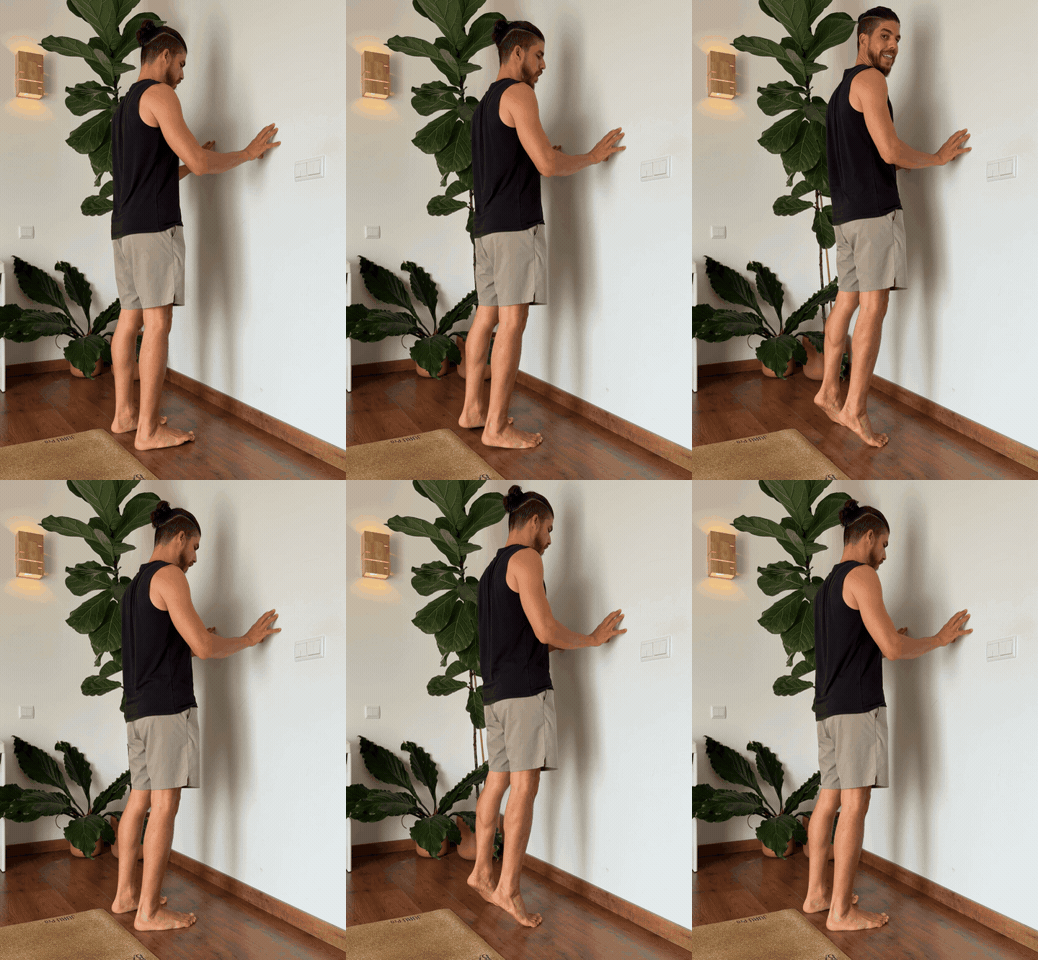
How:
Stand next to a wall with one hand on it for balance.
Lift your heels as high as you can, pause at the top, and lower slowly all the way down.
Why it helps:
Your calves are the muscles below the knee, and they absorb the shock every time your foot hits the ground.
When they’re stronger, less of that impact travels up to the knee, and your balance improves too.
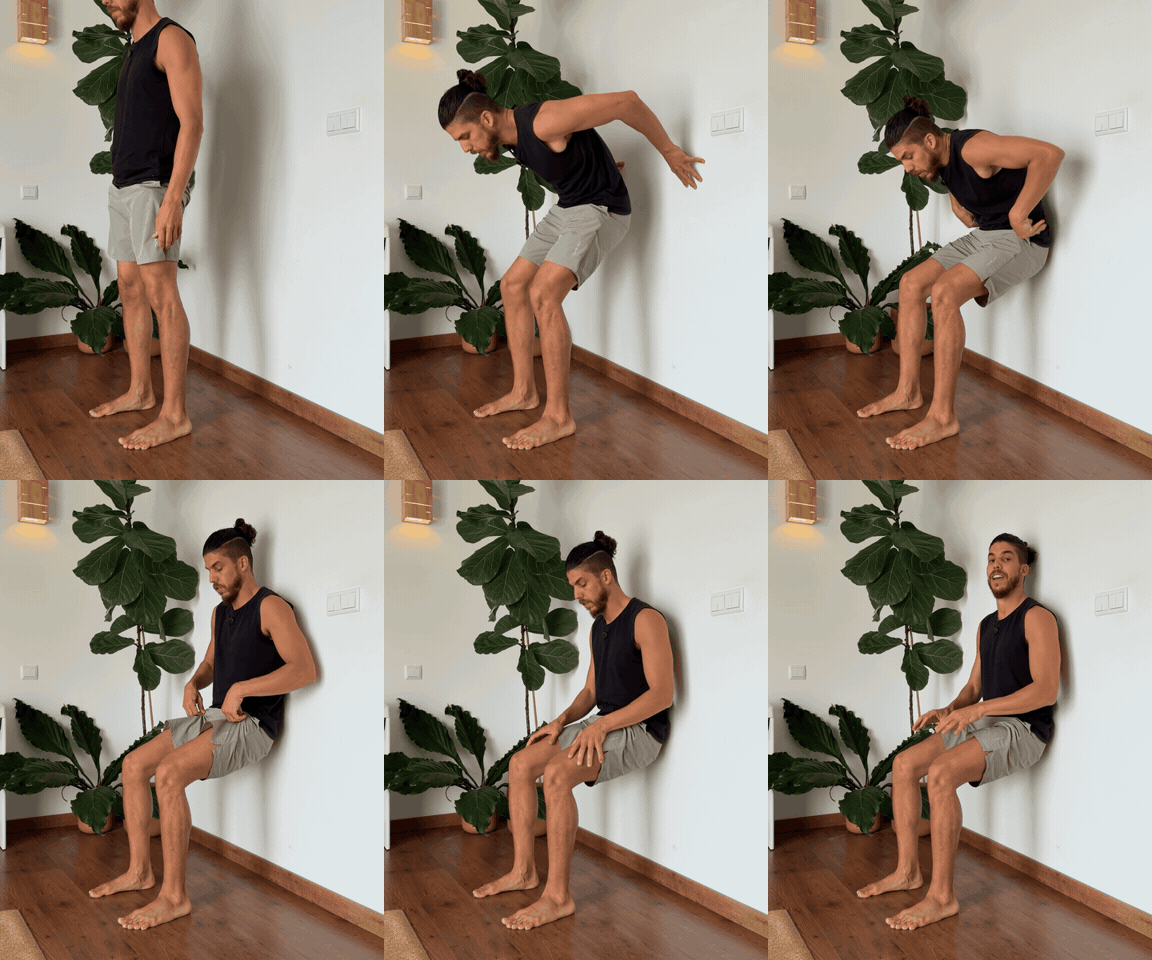
5. Wall sit (at least 20 seconds)
How:
Stand with your back flat against the wall, walk your feet forward, and slide down until your knees are bent.
Keep your knees over your ankles, rest your hands on your thighs, and breathe.
Hold for at least 20 seconds. Start higher up the wall and go lower as you get stronger.
Why it helps:
It builds strength in the whole leg while the knee stays still, so it’s gentle on the joint.
It also trains your legs to hold you up for longer, which is what you need for long walks, hikes and standing in the kitchen.
The takeaway
If your knees hurt, or anything else in your body is holding you back, it’s not because of your age, and it doesn’t mean you’re stuck with it.
You don’t have to suffer through it or just learn to live with it.
It’s in your hands, there’s always something you can do, and most of the time it’s simpler than you think. In this case it’s a towel, a chair, a wall, and a few minutes twice a week.
Have a wonderful day ✨
Idan

 By opting in, you agree to receive emails from me and to my